NOT ALWAYS HAPPY
Arousal, not just joy
The 2024 review says wagging is linked with both positive and negative arousal, and one study found aggressive dogs wagged more than non-aggressive ones.
Read a tailWHAT THE RESEARCH SAYS
A wag is a signal, not a smile.
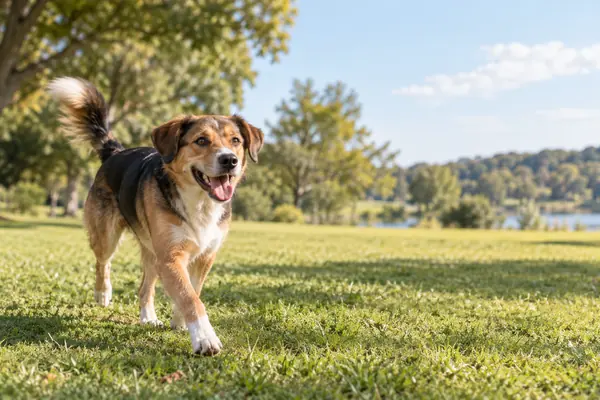
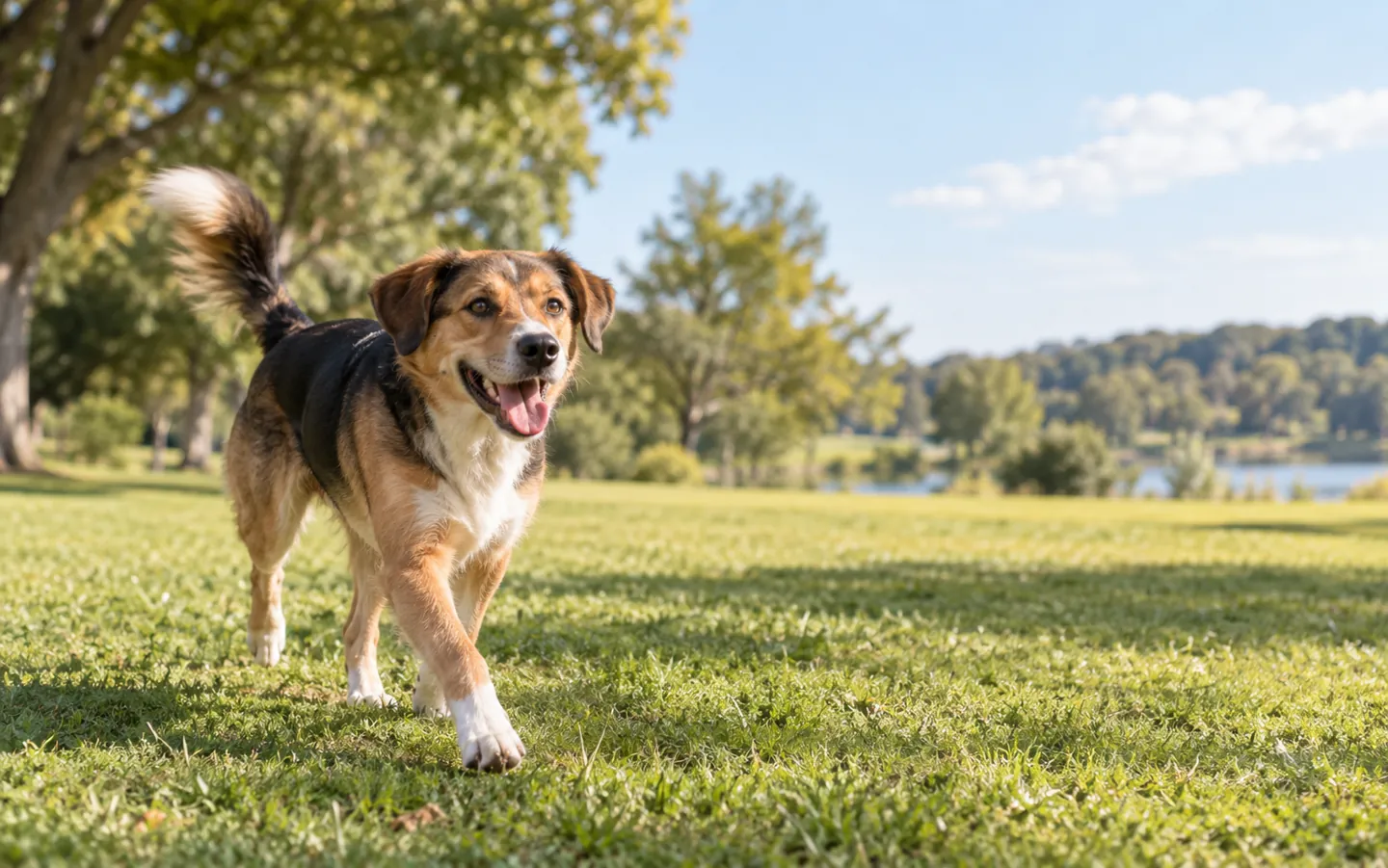
Dogs wag when they are pleased, but also when they are aroused, unsure or asking for something. Studies of wag direction, tail height and puppies point to a richer language than a simple happy sign.
WAG means look closer
THE SHORT ANSWER
A 2024 scientific review and RSPCA guidance agree:
read the tail together with the rest of the dog.
NOT ALWAYS HAPPY
The 2024 review says wagging is linked with both positive and negative arousal, and one study found aggressive dogs wagged more than non-aggressive ones.
Read a tailLEFT OR RIGHT
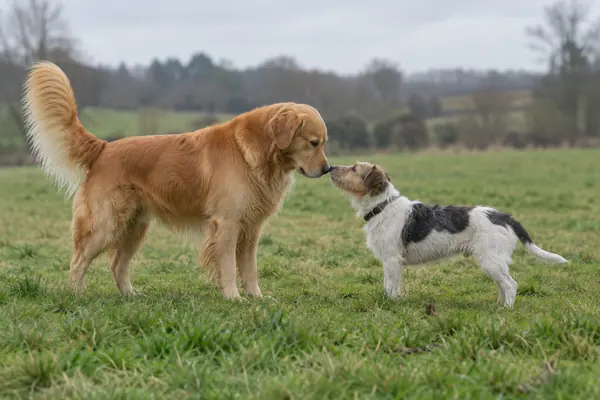
Dogs tend to wag more to the right for things they like, such as their owner, and more to the left for things that make them want to withdraw.
See the numbersPOSTURE
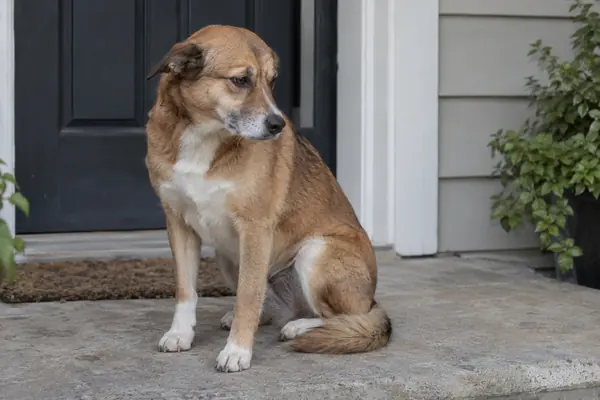
The RSPCA describes a tucked tail on a worried dog, and a tail up and stiff, with raised hair, on a dog that wants you to stay away.
How to read itA QUICK TAIL CHECK
Pick what you see to find out what research and RSPCA guidance suggest. The bar shows how much space to give the dog.
Based on a 2024 review in Biology Letters, a 2013 study in Current Biology and the RSPCA's guide to dog body language. Always read the whole dog, and ask a vet if you are worried.
TWO NUMBERS WORTH KNOWING
One figure on when wagging starts,
one on the rules for docking tails.
4–5 weeks
Age hand-raised dog pups often began wagging
In a study of hand-raised dog and wolf pups, four- to five-week-old dog pups frequently started to wag, while wolf pups raised the same way almost never wagged.
PUPPIES · BIOLOGY LETTERS
5 days
Oldest age a working dog may legally be docked
The Animal Welfare Act 2006 bans tail docking in England and Wales except for medical treatment, or for a vet-certified working dog no more than 5 days old.
DOCKING · LEGISLATION.GOV.UK
The 2024 review estimates there are about one billion dogs worldwide, and says dogs wag more often and in more situations than any other member of the dog family.
FOUR THINGS TO WATCH
The RSPCA suggests getting to know your dog's usual body language so you notice changes. These four checks help.
High and loose, level, low or tucked: tail carriage changes the meaning of a wag.
A wag that swings more to the dog's left can point to wariness, more to the right to something welcome.
A relaxed open mouth and natural ears go with a happy dog; ears back, lip licking and yawning go with worry.
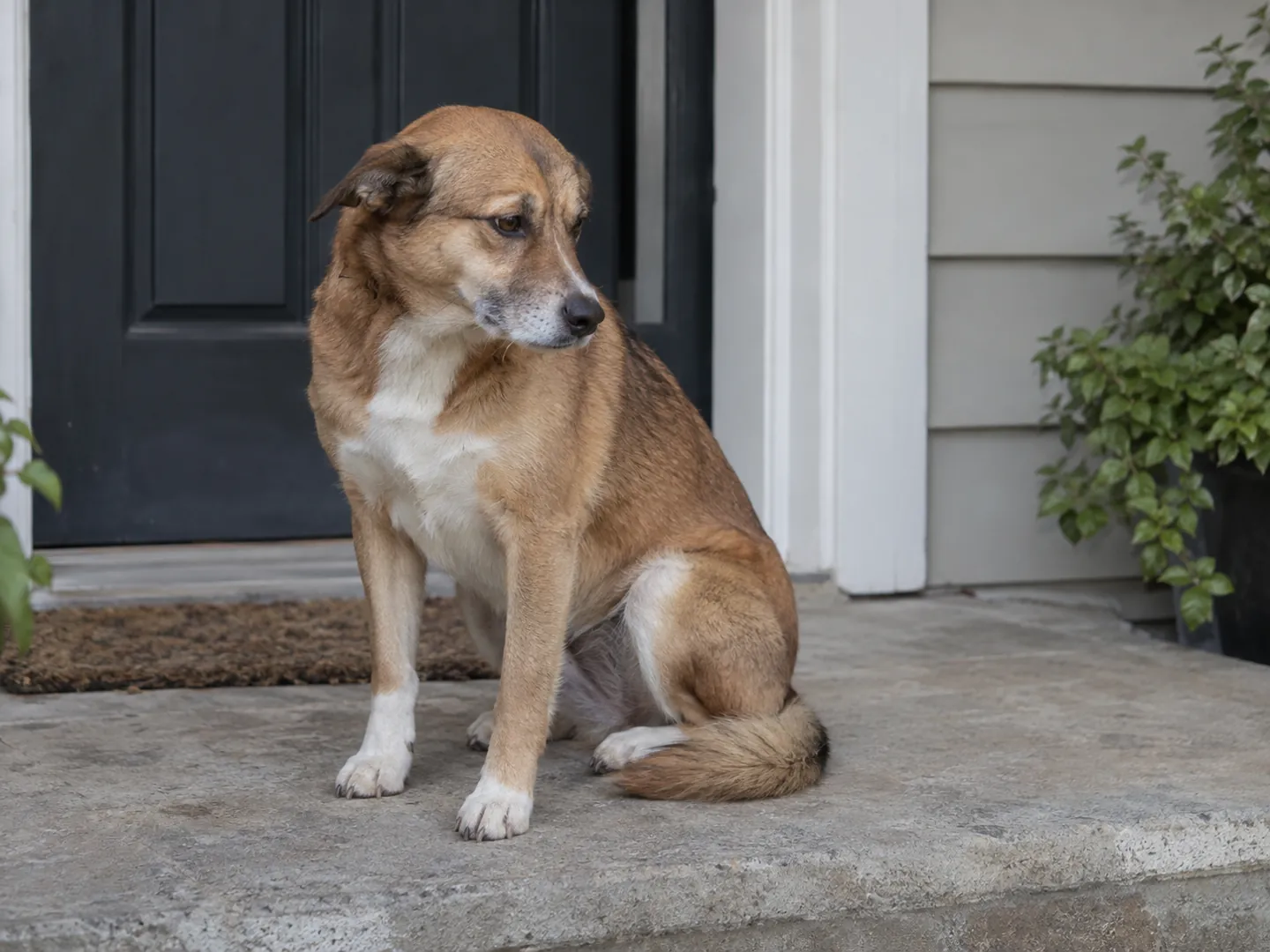
If a dog is turning away, tucking its tail or stiffening, step back. Ask your vet if behaviour changes.
WHY DOGS WAG SO MUCH
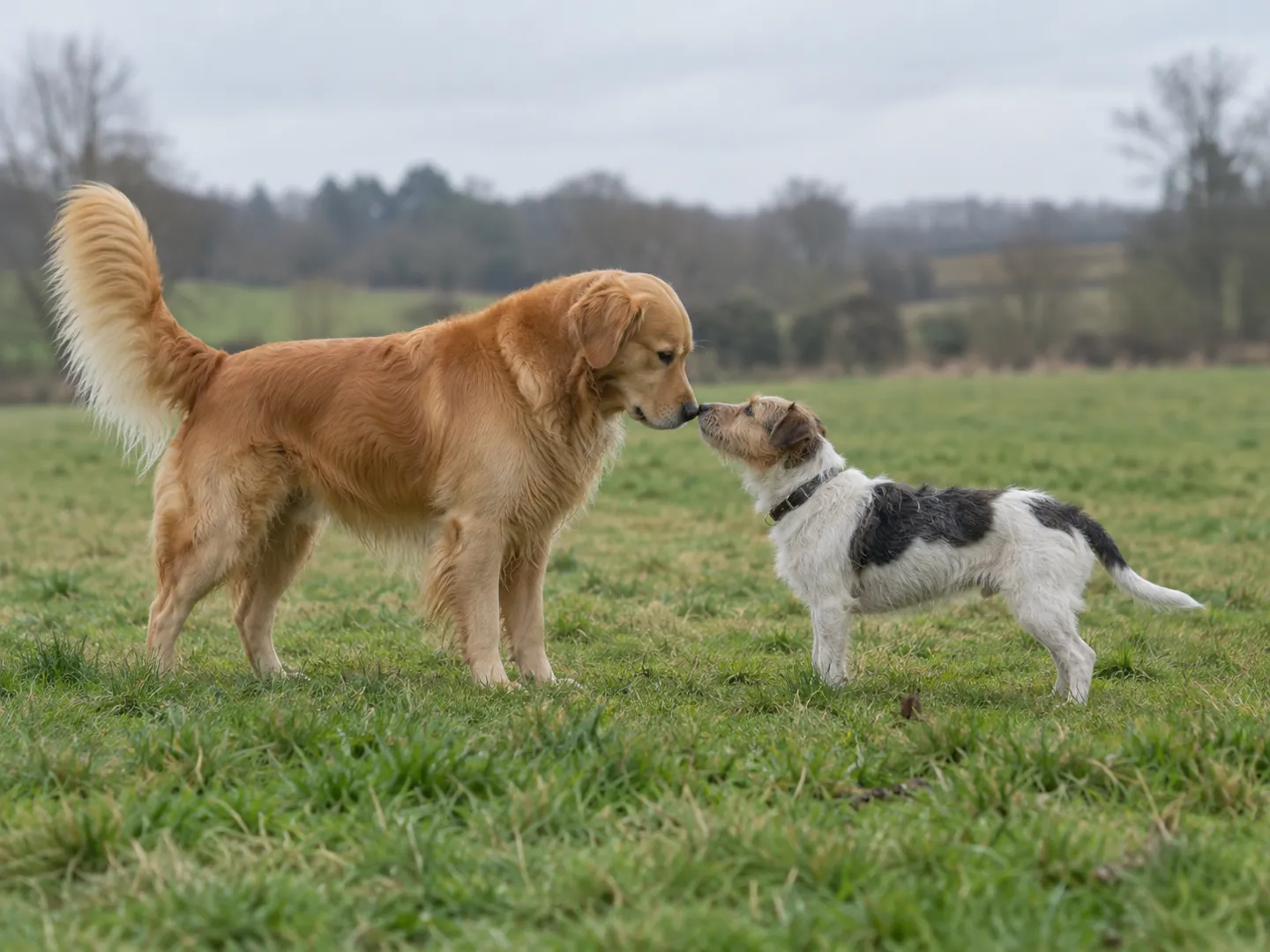
Tails first evolved for movement and balance. In the dog family they are now used mainly for communication, and the 2024 review notes dogs wag far more than wolves, a difference seen as early as three weeks of age.
The authors suggest two explanations to test: wagging increased as a side effect of selecting tame, docile dogs, or people selected for it directly because we are drawn to rhythmic movement.
Questions
Not always. A 2024 review says wagging is linked to both positive and negative arousal, and one study found aggressive dogs wagged more. Read the tail with the rest of the body.
Research suggests so. Dogs wag more to the right for positive things such as their owner and more to the left for things that trigger withdrawal, like an unfamiliar dominant dog.
A 2013 study found dogs watching videos of left-biased wagging showed higher heart rates and more anxious behaviour than when watching right-biased wagging.
The RSPCA lists a tail tucked under, with ears back and a low posture, among the signs of a worried dog that does not want you to come close.
In England and Wales, the Animal Welfare Act 2006 bans docking except for medical treatment, or a vet-certified working dog no more than 5 days old.
Sources
ABOUT THIS NAME
doodletail.com is part of the DoodleSale portfolio. It isn't in an auction right now, but you can ask about leasing it.